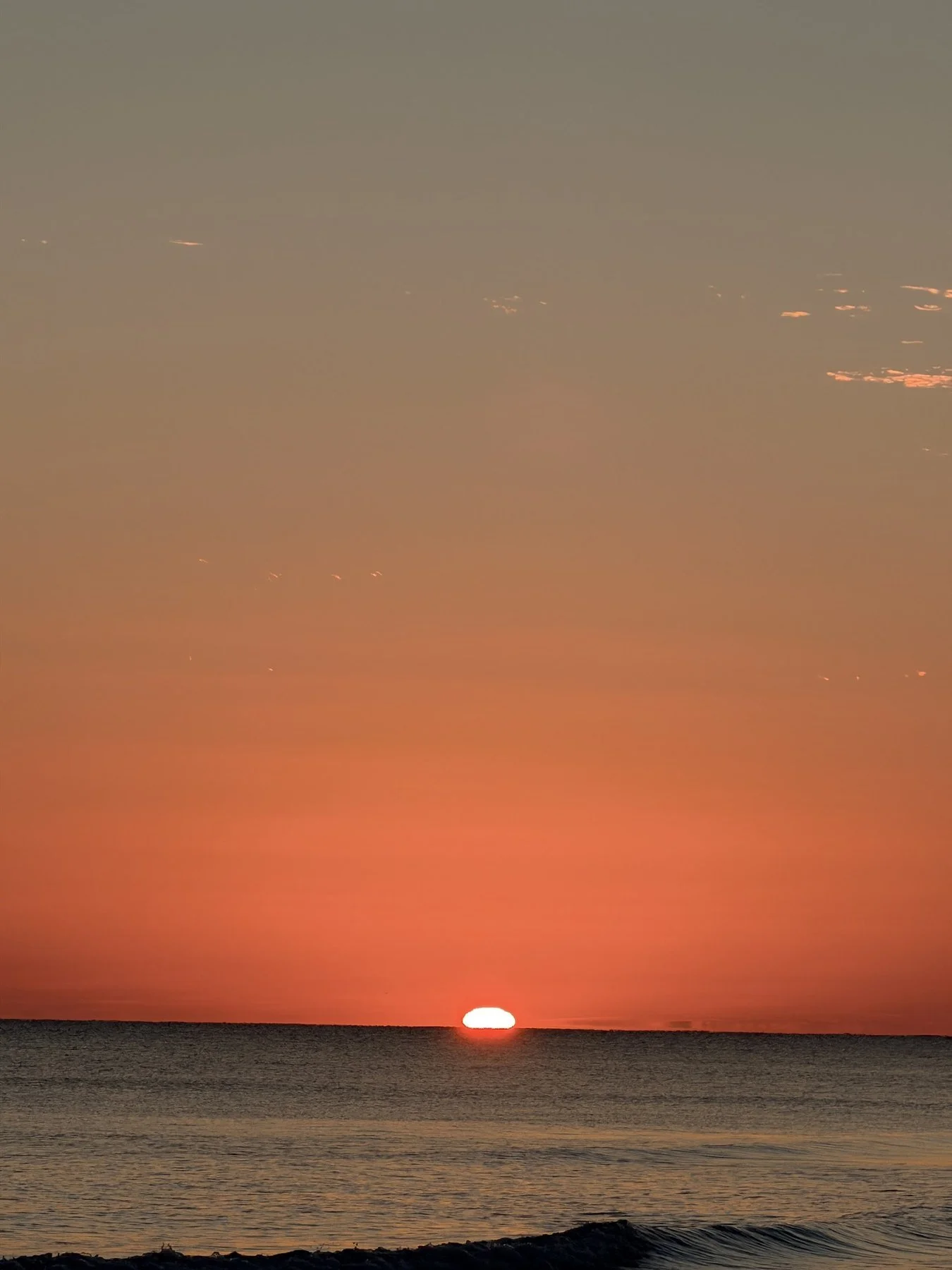
Our first evening back on 30A, we made it down to the beach just in time for sunset. The sky went orange, then soft pink, and the Gulf was calm and glassy, the way we always picture it when we're far away.
It had been about ten days since Hurricane Isaias came ashore near Destin on October 9. We'd seen the news and the photos. But we wanted to walk the beach ourselves and see how our little stretch of 30A was really doing.
Here's what we found, honestly. Some of it is hard to look at. Most of it is hopeful.
The dunes took the hardest hit
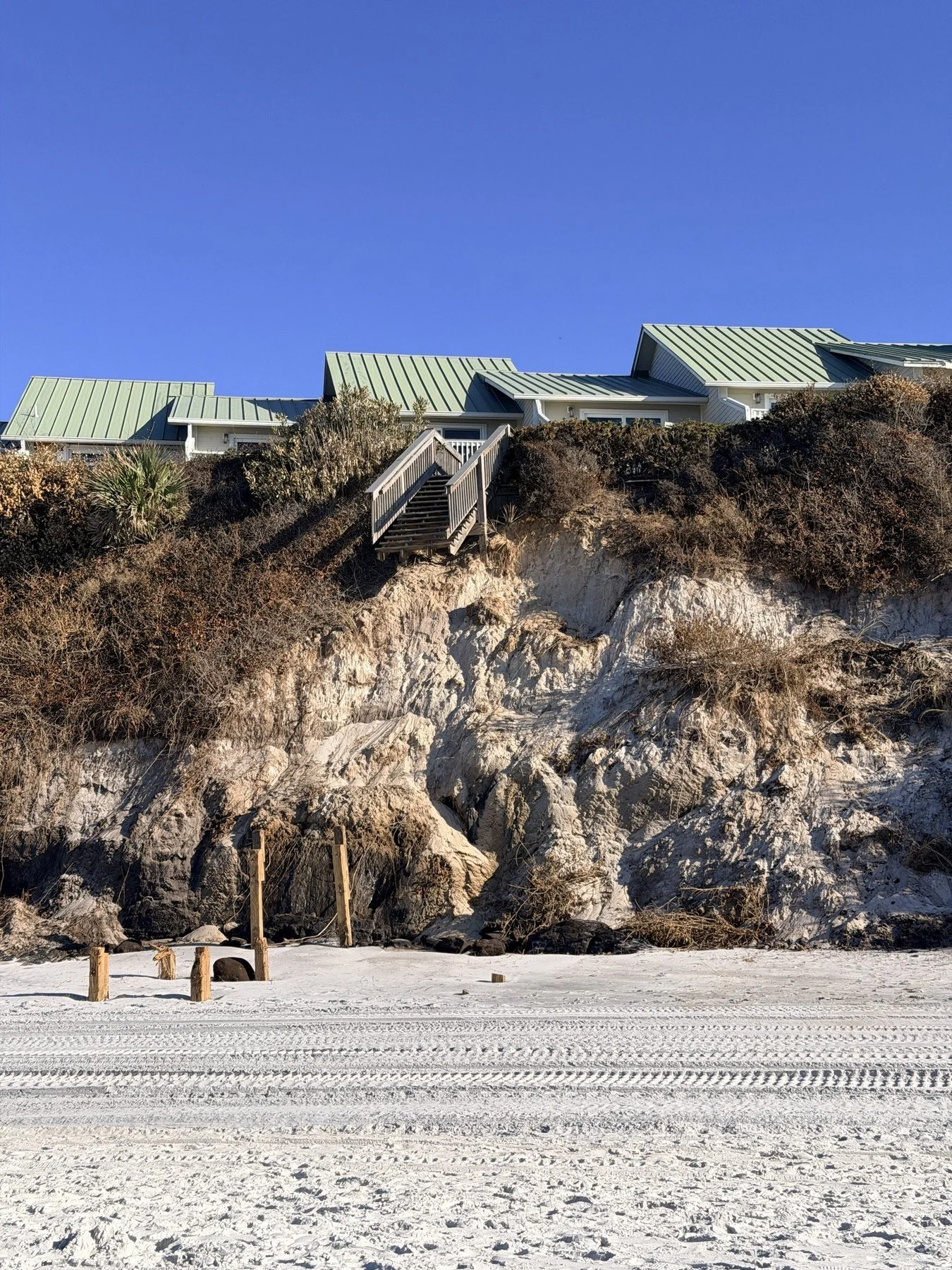
The first thing you notice is the dunes. In a lot of places, the soft, grassy slopes that used to roll down to the sand are gone. What's left is a steep wall of sand, cut straight down, with roots and old walkway posts sticking out.
Storm surge carried a lot of sand away. A Grayton Beach resident told local news that sand that once came right up to a boardwalk was simply gone, and you could walk underneath it. We saw the same kind of thing on our morning walks.
Stairs, walkovers and seawalls
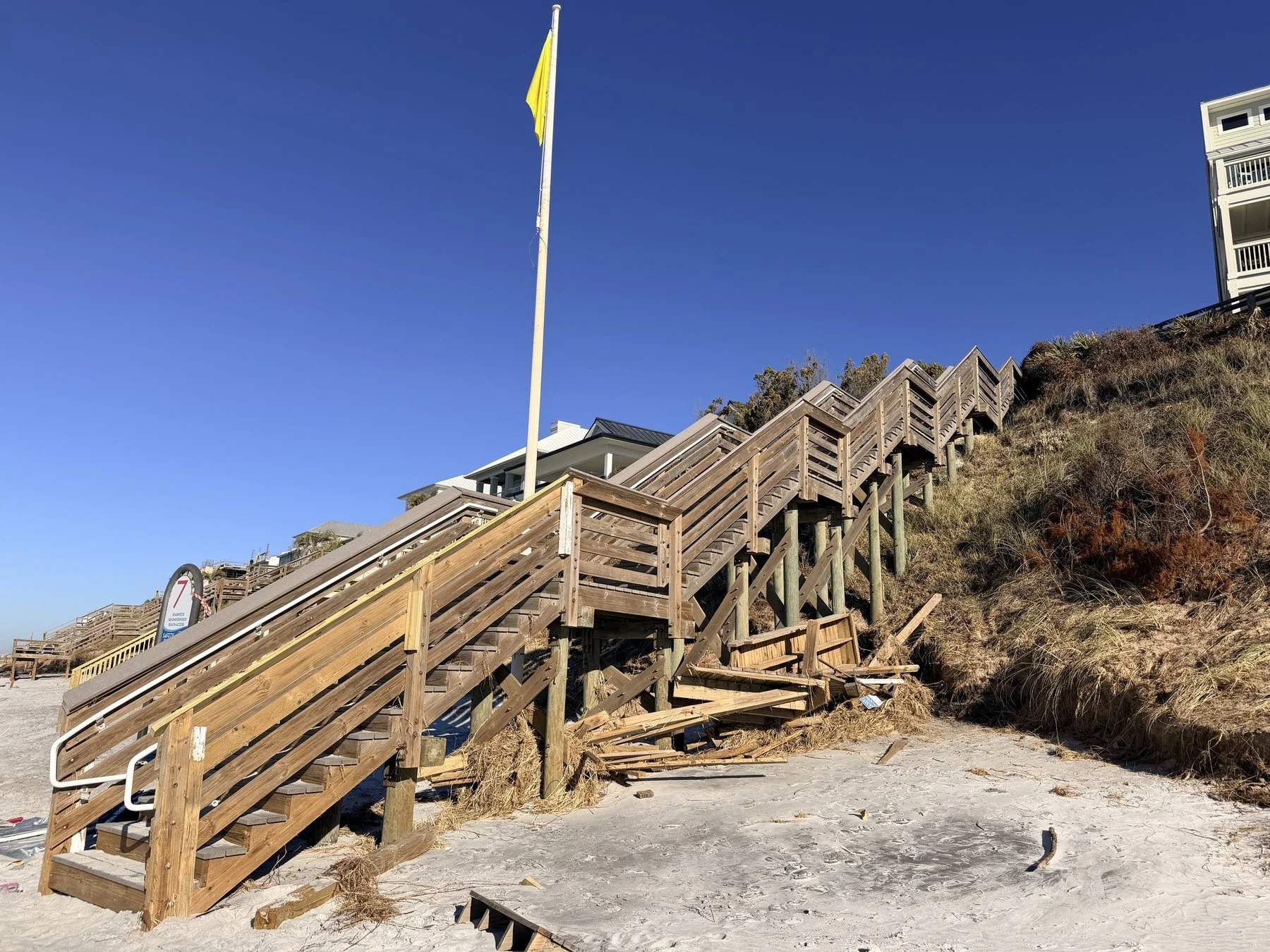
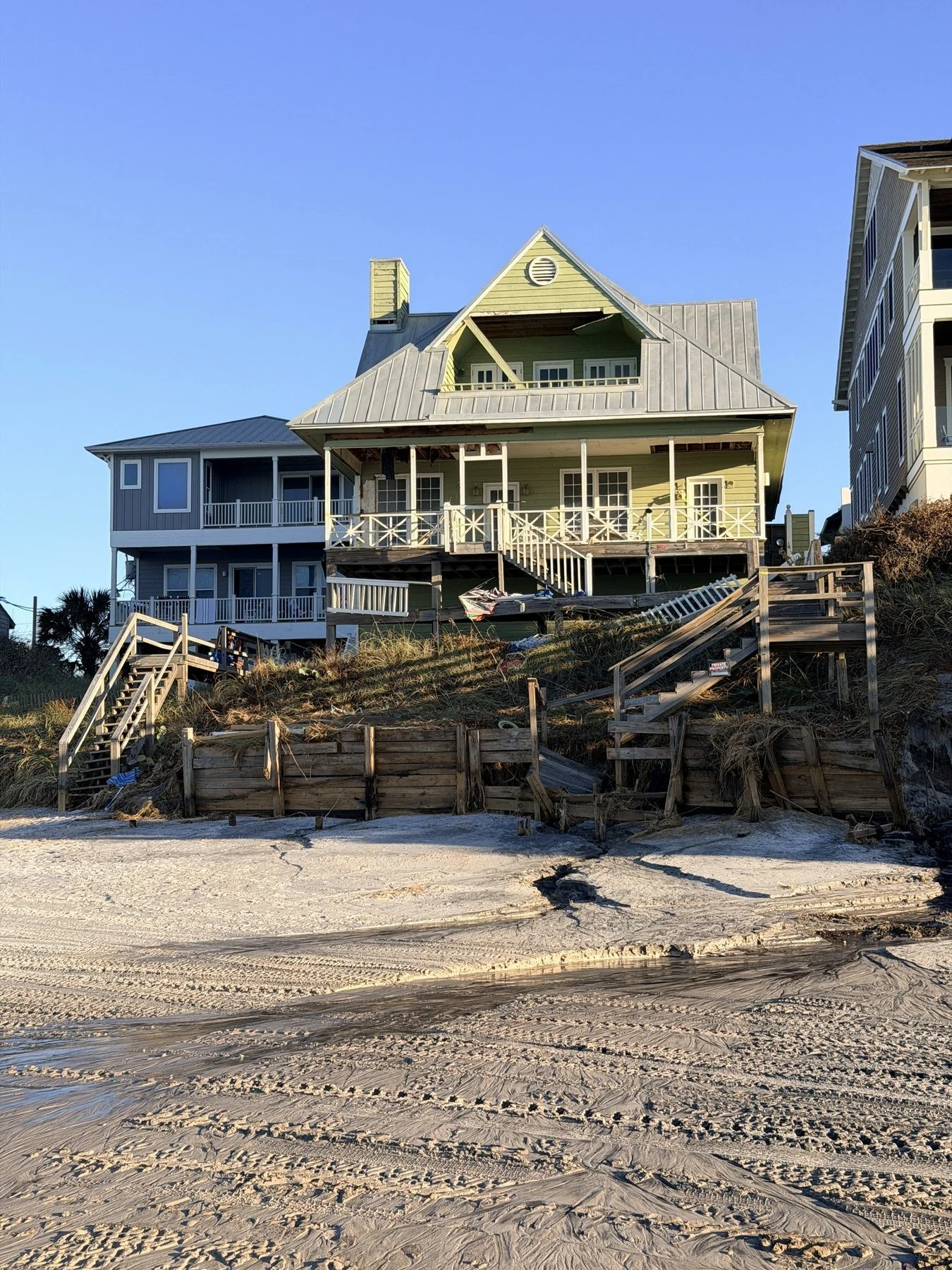
Some beach stairs are broken and twisted now. Some walkovers are closed while they're repaired. Below some of the beachfront homes, you can see seawalls and foundations that were tucked under the dunes before the storm.
It's a lot to take in.
What happens next
Rebuilding dunes takes time. Walton County's director of beach operations told local news the county is talking with FEMA about emergency dune repairs, and designing a longer-term, federally funded beach renourishment project. That design is expected to take about a year.
In the meantime, locals are encouraging Gulf-front owners to plant sea oats and put up sand fencing, which helps the wind rebuild the dunes grain by grain. Nature has done this before. It just needs a little help and some patience.
The beach is still the beach
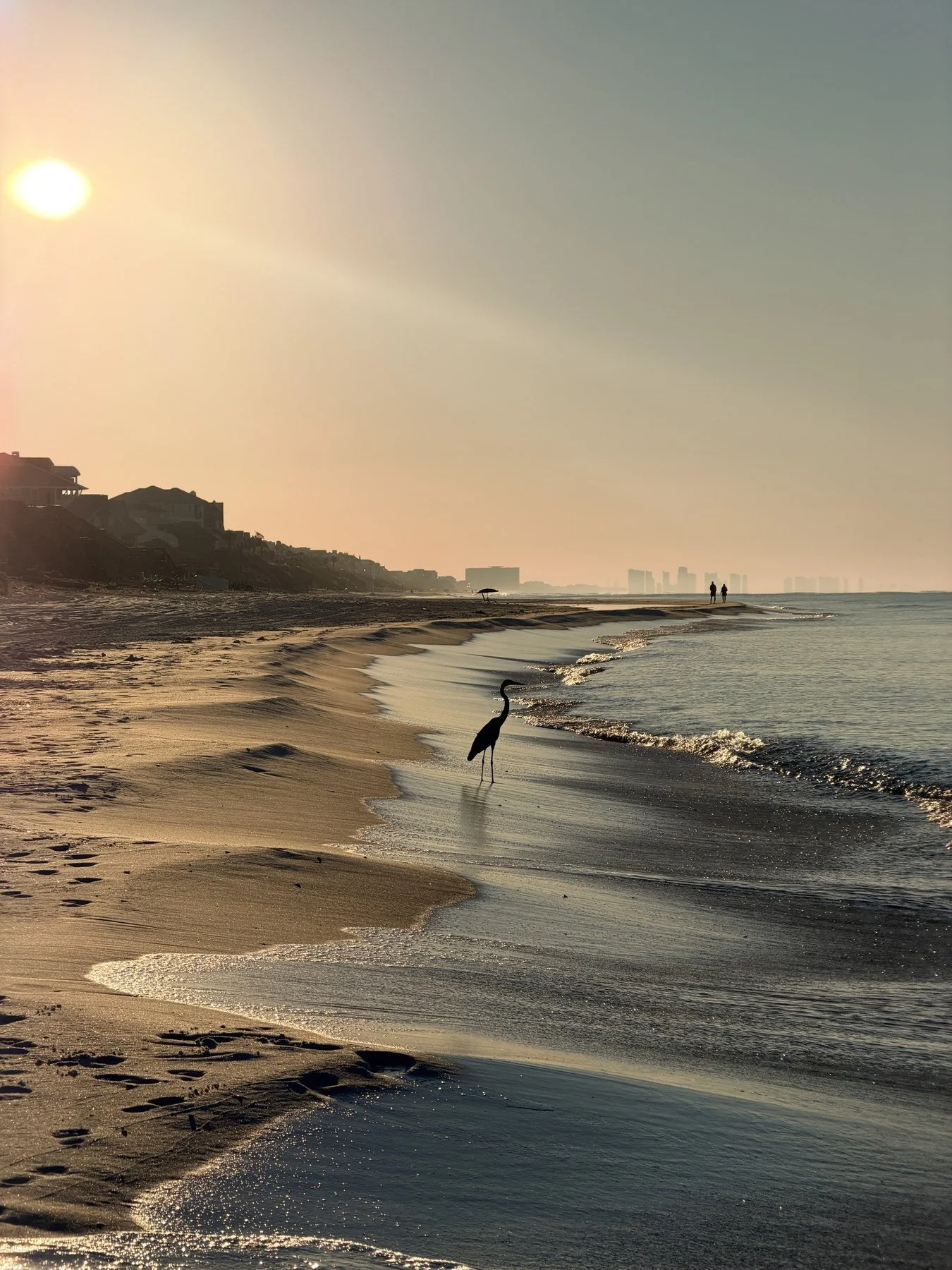
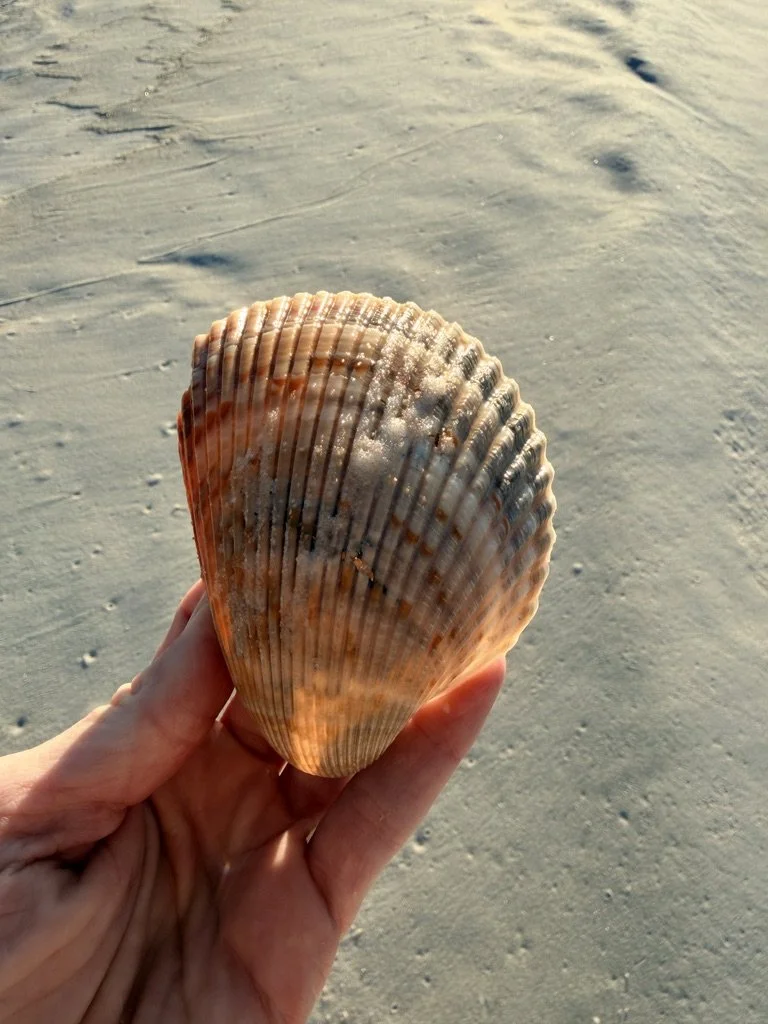
And here's the hopeful part. The sand is still sugar-white. The water was so clear we could see every ripple on the bottom. A great blue heron fished the shoreline at sunrise while we walked, and we found shells the size of our palms.
Beach chairs were already set up on the sand below the dunes. And the sunsets were every bit as beautiful as we remembered.
How to visit kindly right now
If you're coming soon, a few things will help you, and the beach:
Please stay off the dunes and what's left of them, even where they look flattened. They're trying to grow back.
Give the steep sand cliffs plenty of room. Undercut sand can give way, so don't climb, dig or sit right beneath them.
Use beach accesses that are open, and skip any stairs or walkovers that are taped off.
Check the beach flags before you swim. We saw yellow flags flying on our visit.
Watch your step for storm debris, and pack out everything you bring.
Ask us before your trip and we'll tell you what we know about our beach path that week.
How you can help
If you love this place like we do, local groups are helping the community recover. Alaqua Animal Refuge is raising money for debris removal, fencing and shelter repairs, and United Way Emerald Coast has a Disaster Relief Fund. Every bit helps our neighbors get back on their feet.
The Big Sea is ready when you are
Our cottage in Magnolia Cottages by the Sea came through the storm safely, and the porch light is on. The dunes will take time, but the heart of 30A, the people, the quiet mornings and those sunsets, is right where we left it.
Thank you for caring about this place with us. Check your dates and book direct, and come see the beach for yourself.